How to Get Free Airfare
You're going to love this one. I hate to even write about it -- I want to tell you to just
read the Washington Post article, then come back.
Okay, I know you didn't click on the link, so here goes:

Tommie Rice was arrested in Nashville for driving on a suspended license. When he was taken in, Tennessee police ran his name and saw that he was wanted for murder in
Gaithersburg, Maryland. Although he insisted he'd never even been to Maryland, he was flown to Maryland to face trial.
Tommie Rice spent three weeks in jail, including Christmas and New Years, before anyone checked his fingerprints. Guess what? There's more than one person named Tommy Rice in America, and this wasn't the right guy.
Let's hear it for police that fly a suspect halfway across the country without even checking his story. Or even his fingerprints. Let's hear it for a three week imprisonment without evidence. And most importantly, let's here it for what Maryland finally did when they realized their mistake:
They drove him to a homeless shelter.
Since his release, Tommie Rice has been calling relatives trying to get them to lend him money for a flight home. In the meantime, Montgomery County Sheriff
Kight has said he would "try" to get him home. "We definitely owe him a ride back to Tennessee and an apology," he said. Kind words for a man you held without evidence for three weeks, then dumped in an out-of-state homeless shelter.
You owe him more than an apology and a ride home. What's three weeks of your life worth to you? What would you do if you were imprisoned for three weeks because you shared a name with a murderer?
In any case, it's obvious what Tommie needs to do. Just wait until someone by the same name, living in Tennessee, commits a crime.
Labels: dc, personal freedoms
Take My Children ... PLEASE!

Sorry, no link for this, but this morning on the radio I heard some rather disturbing news. Legislators are planning to reintroduce a bill to help police stop underage drinking in Frederick County. Under current law, a police officer witnessing a minor in possession of an alcoholic beverage may arrest the minor for underage possession of alcohol. Additionally, an officer who witnesses a driving minor who appears to be under the influence of alcohol may arrest the same. The new law would allow an officer to detain a minor who simply appears to be acting as if under the influence of alcohol on suspicion of underage drinking. He could also force a breathalyzer test.
This bill was introduced last year and failed, as some opponents feared that this would grant too much power to the police. Well, of course it does! Most importantly, you're giving police the power to harass minors without evidence. Remember when Washington DC allowed DUI arrests based solely on the officer's judgement of intoxication? Before that law was finally changed, we saw numerous arrests and convictions for DUI of drivers with a
BAC under 0.04, and one arrest of a driver who blew a 0.00
BAC at the scene. Give Maryland troopers the same authority, and you'll get the same results.
No standards exist to define at what point an officer can stop a minor and force a breathalyzer test. If an eighteen year old is jogging through the park and sees an attractive young lady, he may weave slightly as he is distracted. Can he now be tested for his erratic jogging? This law would give police the authority to perform an unreasonable search and seizure on a minor without justification or evidence except the officer's judgement.
I'm also curious as to what the minor would be charged with. In the vast majority of states, including Maryland, the consumption of alcohol while under the age of 21 is not a crime. Purchase, possession, and consumption prior to driving are, but consumption is not. Why? Because the law specifically allows immediate family members to provide alcohol to minors within their own homes. If you can convince your parents that you're mature enough to drink, you are home free. And yes, I know a great number of parents that do purchase beer and wine for their children in Maryland.
So, in a nutshell, Bob the 18 year old kid is going to prom. He's hired a limo, so he isn't driving. His libertarian parents split a bottle of champagne with him first, to celebrate his "growing up." Walking into the prom, a police officer decides to perform a breathalyzer on him, and finds he blows a 0.02. What's the charge? Drunk and disorderly? I don't get it.

You've all heard the argument that if you're old enough to serve your country, you're old enough to drink. Ironically, the majority of people I meet who agree with that statement feel that anyone in the military should be allowed to drink, while civilians should have to wait until they are twenty-one. You could do three full tours in Iraq before your twenty-first birthday. If you were mature enough to make that decision at eighteen, you were sure as hell mature enough to make a decision on a glass of beer. Even if you decided the military wasn't for you, surely you've now reach the point in life where you're responsible for your own actions?
Look, folks, don't any of you remember being twenty? Try to remember the first time you drank alcohol. How old were you? Did you do it in your own house with your parents? In college, maybe in a frat house?
The absolute best place to learn about alcohol is from your own parents. Your parents are there to teach you about life. This is why most states allow parents to provide alcohol to their children. If you do not teach your children about drinking,
someone else will. Chances are that person will be a peer with no more experience that your kid. They're probably be influenced by movies showing severe intoxication. They'll probably purchase cheap flavorless beer and liquor, and consume it in great quantities.
I thank my parents for wisely introducing me to alcohol at an early age. Twelve, if you're counting. Of course, they closely monitored how much I drank, and I didn't even get a buzz on until I was sixteen. I was eighteen when I finally got drunk. Imagine that -- six years of experience appreciating alcohol before I first managed to get drunk.
The
neo-prohibitionists want to outlaw responsible parenting. They think by delaying the consumption of alcohol as long as possible, they can remove it entirely from our culture. It's simply not true. What we're getting is a nation of closet drinking youth, afraid of any supervision while they explore adulthood.
My message to America is "Teach your children well." My message to the government is "Get out of our way. We're better than you at this."
Labels: alcohol, dc, nanny state, personal freedoms
Truth and Lies in E-mail

I got one of those e-mails today that tried to justify staying in Iraq. While I agree that we should stay, I don't support the use of fuzzy math to pull the wool over peoples' eyes. Here's the e-mail I received:
Subject: STATISTICS
Interesting thought for the day: - Gotta love the logic.
If you consider that there have been average of 160,000 troops in the Iraq theater of operations during the last 22 months, and a total of 2112 deaths, that gives a firearm death rate of 60 per 100,000.
The rate in Washington D.C. is 80.6 per 100,000. That means that you are about 25% more likely to be shot and killed in our Nation's Capitol, which has some of the strictest gun control laws in the nation, than you are in Iraq.
Conclusion: We should immediately pull out of Washington D.C
In God We Trust
(All typos from the original)
It doesn't take a genius to see this was rapidly thrown together by someone who didn't care to check statistics. The given numbers show not the firearm death rate for Iraq, but the overall death rate including accidents. Even then, if you do the division you'll find the stated numbers come out to 1320 per 100,000 over the 22 month period, or 720 per 100,000 over a one-year period.
Of course, it's not fair to add in the non-combat deaths, nor is it really fair to include deaths from the "major combat" phase of operations. After all, we're trying to compare the cost of supporting peace and democracy in Iraq, not the cost of the overall war. We can't change the past, but we can consider the future. So how many Soldiers are dying in Iraq from combat?
According to casualties.org, a mildly anti-war site, there have been
1,604 hostile deaths since the end of major combat, a period of 141 weeks (April 9th 2003 through Dec 17th 2005). And although the number of troops was higher during major combat, and there has been talk of increasing troops strengths back up, the baseline for US troops in Iraq has been 138,000. So, when I do the math I get a hostile death rate of 428.65 per 100,000 troops, per year.
You may have seen statistics that the DC area saw a record 466 homicides last year. Of course, that's the DC area --
Washington DC itself saw a slight decline last year, with only 194 homicides.
With a population of 572,000, Washington has a homicide rate of 33.92 per 100,000 residents, per year.
Net result: Your odds of being shot during a one-year tour of duty in Iraq are approximately ten times your odds of being shot in Washington DC during the same time period. A man who lives in Washington DC his entire life, therefore, is far more likely to be killed than a Soldier who deploys to Iraq for a year.
Of course, we can fudge the numbers further if we get into squishy math. Most of the Soldiers deployed to Iraq are men, aged 18-25. The vast majority of homicides in DC are men in the same age group, but our death rate has factored in little children and old ladies. But I'm not trying to split hairs or reach a magic number. I just want to illustrate, without making up numbers, that Iraq is not the den of death that Zarqawi wants Americans to think it is. It's not Vietnam, where in 1968, the death rate was roughly 2894.74 per 100,000 Soldiers, per year.
Oh, and in case you think it's time to leave Washington,
Marion Barry was robbed today, at gunpoint. What do you think he did? According to the Washington Post,
this was his statement:
"To this young man who did this to me, I have no animosity," Barry said. "I don't even want you prosecuted. I love you. Give yourself up. Call the police. Let them know that you engage in these activities. I will do all to advocate non-prosecution."
Labels: dc, iraq
What the Press Won't Tell You

Michelle Malkin writes in a wonderful piece entitled "
All the news that's fit to omit" about a New York Times article opining about the 2,000 casualty in Iraq (link
here, but you have to pay). Let me start by saying that the article failed to alert readers to the fact that nearly a quarter of those deaths were not combat related. I don't know why 1,588 combat fatalities is a "grim milestone," but I'll grant the NY Times that license to embellish.
What bothers me is that the article focuses on a single soldier, Cpl Jeffrey B. Starr, who died April 30th in Ramadi. Note that Cpl Starr wasn't the 2,000 soldier to die, rather, he died months ago. He was chosen out of all the soldiers who perished in Iraq, to symbolize the cost of the war. The title of the piece?
THE CONFLICT IN IRAQ: THE FATALITIES; 2,000 Dead: As Iraq Tours Stretch On, a Grim Mark
Allow me to quote from the article:
Sifting through Corporal Starr's laptop computer after his death, his father found a letter to be delivered to the marine's girlfriend. ''I kind of predicted this,'' Corporal Starr wrote of his own death. ''A third time just seemed like I'm pushing my chances."
Is it just me, or does it sound like this young man was disillusioned, upset at being in Iraq, and fearful for his own life? One is left wondering why he was willing to go to Iraq three times with that attitude. Lest I leave you with the impression that this hero of our country was anything less than that, allow me to quote a little more of the letter, not published by the New York Times:
Obviously if you are reading this then I have died in Iraq. I kind of predicted this, that is why I'm writing this in November. A third time just seemed like I'm pushing my chances. I don't regret going, everybody dies but few get to do it for something as important as freedom. It may seem confusing why we are in Iraq, it's not to me. I'm here helping these people, so that they can live the way we live. Not have to worry about tyrants or vicious dictators. To do what they want with their lives. To me that is why I died. Others have died for my freedom, now this is my mark.
The American public needs to know the Cpl Jeffrey Starr did not die following orders he did not understand. He did not die fighting for a cause he didn't believe in. Cpl Starr died because he felt it was his duty to allow people all around the world to enjoy the same freedoms he enjoyed at home. He found for his country, and the Iraqi country. He knew the risks, and accepted them freely without hesitation or reservation. The New York Times has no right to take that away from him, and turn him into a symbol for peace at any cost.

In lighter local news,
the Washington Post reports that Mayor Anthony Williams has changed his mind and signed the emergency DUI law. It's obvious that he did so in order to attempt to preserve some kind of high ground for a compromise law that, while not setting the legal limit as ridiculously low as before, would still have DC presuming intoxication at levels every other state in the nation recognizes as generally safe. This is at best a half-victory; it means the police harassment of innocent people will abate for the time being, but everyone needs to write their councilmen and Mayor Williams and tell them the only acceptable law is one in line with the rest of the nation.
And click on the news article scan, it's worth reading. Trust me.
Labels: alcohol, dc, heroes, iraq, media
DC Bill Passes
Good news! The emergency legislation that I mentioned
here has passed. Unless the mayor vetoes it, you can no longer be charged with DUI regardless of your blood alcohol content. The new rules put DC in line with Maryland and Virginia. Namely:
| Under 0.05 | You are presumed not intoxicated |
| 0.05 - 0.079 | You are not presumed intoxicated. You may be charged if you exhibit other signs of intoxication, such as slurred speech, erratic driving, etc. |
| 0.08 and above | You are presumed intoxicated. |
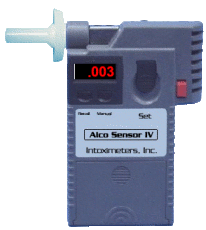
Not sure what these numbers mean? Run
this test to see how quickly your
own BAC rises.
I'll tell you now that my opinion is 0.08 is too low, and many drivers are able to drive perfectly well at that level of alcohol. However, let's celebrate one battle at a time. And I'd also like to thank all the Nervous Rodent readers who wrote or called their councilmen to help get this legislation through.
Mayor Anthony Williams has ten days to decide whether to veto the legislation. He's already attacked it, calling it "hastily written" and criticized the council. E-mail and call the mayor, explaining that it is necessary to keep DC businesses alive, and DC drivers safe from unfair prosecution.
Assuming the mayor doesn't stand in the way of this bill, it will take effect for ninety days. In that timeframe, new legislation will have to pass to make the changes permanent. Tell you councilmen that you don't think police should be able to charge drivers with crimes they can prove they didn't commit.
Voting against the measure: Kathy Patterson (D-Ward 3), Phil Mendelson (D-At Large) and Sharon Ambrose (D-Ward 6).
Check out
Paulie's post on this at
Paulie World.
Labels: alcohol, dc, nanny state, personal freedoms
This Week in Iraq
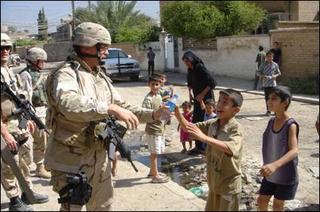
I made a prediction last week that the referendum would limit the starting of new projects in Iraq, and it looks like I was right. The big news, of course, is the referendum.
You've probably been reading the
blogs about the upcoming referendum. If you missed it, you'll definitely want to read
this one written by an Iraqi citizen, where he describes the Ba'athist propaganda, as well as compares this vote to those under Saddam.
But here's the
news: Out of 1,200 polling stations, only five were attacked. Nobody was killed, and only seven voters were injured. During last year's elections, I remember the editorials talking of violence, but the embedded reporters were just showing Iraqis dancing in the streets, holding their thumbs in the air. The terrorists were unable to stop that election, and they did even worse stopping this referendum.
Make no mistake, this referendum is important -- far more important than the elections. And whether they vote yes or no, it's still a good thing. The elections allow the Iraqi people to choose leaders, but the referendum allows them to choose a system of government.
Nervous Rodent's prediction: 65% yes, 10.5 million votes cast, constitution passes. We'll see how well I do.
But since you expect to hear things here that aren't printed elsewhere, I do have a little tidbit to tide you over. Thursday and Friday saw groundbreaking ceremonies for the construction of two new substation feeders, costing a total of $1.5 million, in Baghdad. And a new $200,000 clinic is opening in Baghdad. Next time you wonder why the US is spending so much on the "war" in Iraq, remember that much of the money is helping people help themselves.
Also,
Michael Yon has a new blog post up. While it may not be news events from Iraq, it is news from Iraq. And as always, he will help you see what life in Iraq is really like. This time he also helps show why the media is giving such a distorted view.
In other news, the DC Council has introduced
emergency legislation that states anyone driving with 0.05% BAC or below is presumed not intoxicated. Keep calling your councilmen, and let's make this thing pass!
Labels: alcohol, dc, iraq, nanny state, personal freedoms
Too Drunk to Drive, Continued
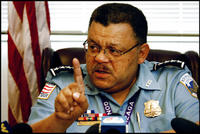
Remember this mug shot? You should, because I posted an
article about Police Chief Ramsey last week. I called on him to admit his mistakes and correct them. And now, as the Washington Post
continues its series about DUI laws in the District, I'd like to say it again.
Given my
previous article on DUI laws, and the controversy that the Washington Post has stirred up, you'd think that the Police Chief would set about to correcting the wrongs, right? Or would you expect him to lie, again, to the press? Let's examine the facts:
While being interviewed by the Washington Post, Officer Dennis Fair was quoted saying "If you get behind the wheel of a car with any measurable amount of alcohol, you will be dealt with in D.C. We have zero tolerance."
When the Post asked Ramsey about that quote, Ramsey replied "He's wrong if he's saying that. It's not coming from me, and that's certainly no policy I've instituted. That's just incorrect." Ramsey then denied that he has ever used the term "zero tolerance" to describe the DC policy on drinking and driving. Why then, Chief Ramsey, did the DC Police Department's website say that DC has a "zero tolerance" policy until Tuesday, the day that the Washington Post printed the first article in the series?
Don't believe me? Use the Web Archive to check the facts.
This link will take you to an archived copy of the DC Police's website from last week, and
this link will take you to the same webpage today.
That's twice in two weeks that Police Chief Ramsey has been caught in an outright lie. Folks, call your Councilman and demand that DC's laws on drinking and driving be brought in line with the rest of the nations. And Chief Ramsey, it's time for you to start telling the truth.
Labels: alcohol, dc, nanny state, personal freedoms
Too Drunk to Drive, Too Sober to Patrol
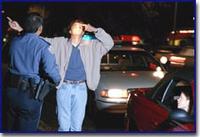
It's a well-intentioned law, I admit that. But DC's DUI laws are hurting innocent people, and it's time they were changed.
After the Washington Post ran an
article earlier this week about Debra Bolton's legal troubles, people are starting to
notice. And it's about time.
In most states, the legislature has set a legal limit for the maximum concentration of alcohol in the blood when driving, usually 0.08%. This is generally acknowledged as a simplistic solution to a complex problem. We all know someone who can drink way more than they ought to, and still act sober. We also know people that drink very little and still stagger about. What this means is that not everyone reacts the same way to the same concentration of alcohol.
To even things up, many states having two threshold levels. In Maryland, for example, driving with a blood alcohol content of 0.08% is illegal -- period. You will be charged with DUI in that case. If the BAC is between 0.07% and 0.08%, that is considered prima facie evidence of DWI, and you will probably be charged. Between 0.05% and 0.07%, you may be charged with DWI, if your other actions indicate that you not only ingested alcohol, but that you are impaired by it. Below 0.05%, you are not considered impaired by alcohol.
This system gives police a little leeway to evaluate drivers straddling the fuzzy line, where some might be perfectly safe, while others are clearly unable to safely drive. Of course, there are cases when police make poor decisions, but the law does limit the policeman's ability to make judgments that aren't backed by evidence. He couldn't declare someone with a 0.15% BAC to be sober, nor could he declare someone at 0.02% to be drunk.
Not so in Washington, DC, where the law gives the policeman all the latitude he needs to make judgment calls. Driving at 0.08% or higher is an automatic DUI charge, but a police officer may charge any individual with DUI, based solely on his judgment, regardless of blood alcohol levels. As a result, hundreds of people are charged each year with DUI or DWI, despite having blood alcohol levels of 0.03% or lower.
How low is 0.03%? An average woman who drinks a single glass of wine with dinner, over the course of an hour, will typically score about 0.03%. Ever seen a woman sip a single glass over an hour, then stagger down the street drunk? Me neither.
But some DC police go even further. This year they even charged a computer programmer who registered a perfect 0.00% on the scale, because in the officer's judgment, he was drunk.
The vast majority of these cases are dropped without conviction, generally for lack of evidence. But that doesn't mean they don't matter. It can cost thousands of dollars to contest a DUI charge. And being found innocent in court doesn't mean your insurance company will consider you innocent -- or even the DMV. According to Corey Buffo, the general counsel for the DC DMV,
"Our burden of proof is lower.... Not enough evidence for them may be enough evidence for us."
You you get pulled over on a bum charge, the officer decides he doesn't like you, and he charges you with DUI. You spend thousands of dollars to prove you're innocent, but your license is still suspended. When you finally get it reinstated, your insurance has doubled.
All those in favor of responsible legislation, raise your glasses. Unless you plan on driving home tonight.
Labels: alcohol, dc, nanny state, personal freedoms
Free Speech vs. Fair Elections
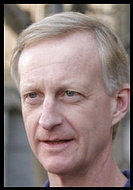
Councilman Jack Evans, shown to the right, is in
hot water. Maybe not as bad as
Marion Barry, who has been indicted for tax fraud, but hot water nonetheless. Apparently, Jack Evans has been running a Political Action Committee, and handling the money and reimbursements himself. In English, he has been accused of taking money from supporters, and spending it on his campaign.
Say what?
The
Federal Election Commission has developed rules to prevent rich corporate moguls from "buying" elections. These rules limit how much can be given as campaign contributions, and how much can be spent on TV ads and so forth.
Just to prove how effective those rules are, I challenge you to name a single candidate for president that garnered significant support, but was not a millionaire. I couldn't either. But I do remember Ross Perot, who tried to buy an election without a party behind him. Kerry had the Heinz fortune, and Bush is rich in the wealth of Texas oil. Even Cheney's got Halliburton backing him up.
The reasons that money still talks in politics are multiple. Firstly, would you vote for a man that was not capable of raising significant funds? If you've got the charisma, intelligence, and social aptitude to be the leader of the free world, you're not going to be flipping burgers at McDonalds at forty-five. Secondly, Political Action Committees (PAC's) can spend millions of dollars without being bound by the FEC's rules.
Over the last few elections, you've seen PAC's in action. As the FEC tightened rules elsewhere, PAC's grew in importance. Now it seems that PAC's, like
Swift Boat Veterans and
MoveOn are more vocal than the candidates. And that's because they are! As long as they don't endorse a specific candidate or break various other rules, they can spend all the "soft" money they want.
Most bloggers were completely unaware of campaign law until the Bipartisan Campaign Reform Act of 2002, known as the
McCain-Feingold Law, was
extended to apply to the Internet by US District Court Judge Colleen Kollar-Kotelly. Unable to register and comply with complex PAC regulations, bloggers who endorse candidates will be considered campaigners -- and subject to a candidate's limitations on campaigning. Fundamentally, this will
legally prevent bloggers from endorsing candidates at all, to include quoting or reprinting press releases or linking to campaign sites.
Congress shall make no law respecting an establishment of religion, or prohibiting the free exercise thereof; or abridging the freedom of speech, or of the press; or the right of the people peaceably to assemble, and to petition the government for a redress of grievances.
I think most people agree that money shouldn't buy elections. Major media conglomerates should not charge less for ads for candidates from one party than another. But our government has no right to prevent the public, or the press, from expressing our own opinions on candidates. Nor should our government restrict candidates from spending money to obtain airtime, in order to have their opinions heard by the public. Because while money may be the root of all evil, free speech is the foundation of a free society.
Labels: dc, free speech, personal freedoms
Your Safety for Sale
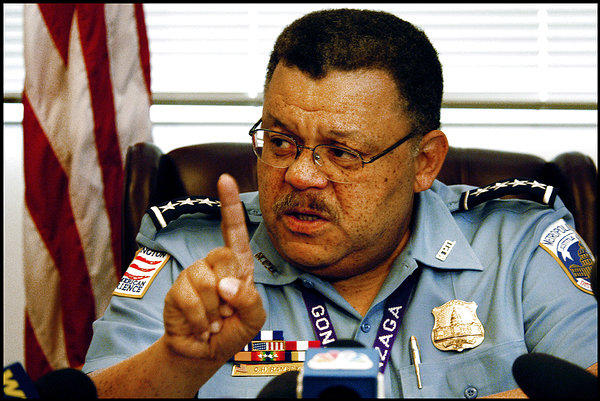
Folks, if you don't live in Washington, DC, you may not recognize the man to my left. His name is Charles Ramsey, and he's the Police Chief here in town. And he's a lying crook.
Despite today's
Washington Post article which revealed the District's red-light cameras have not had any effect whatsoever on accident rates, Chief Ramsey stands by them as effective. He says that the number of red lights being run has dropped by sixty percent since the cameras were installed in 1999. "They make people slow down. They reduce the number of traffic violations, and that's a good thing."
Okay, Chief. One question -- sixty percent fewer people run lights, but accident rates remain constant, what does that tell us? It tells us the people running red lights aren't causing the accidents. Second question -- why should the police department waste resources enforcing a traffic law that doesn't cause accidents?
Did I just say "waste resources"? These cameras don't waste resources. In fact, since installation in 1999, the forty-five cameras have netted the District a cool $32 million. If these cameras were meant to prevent accidents, not raise money, then why were seven installed at intersections that had not seen a single crash in years?
This isn't a new issue. In 2002, the Weekly Standard ran a
five-part serial about this. One of the surprising things they exposed was how this program was managed. The entire process was contracted to Lockheed Martin IMS, who kept $32.50 for every red-light ticket, and $29 for every automated speeding ticket. (Since then, the contract moved to Affiliated Computer Services.)
What's wrong with this picture? Not only does the program not serve a public purpose, but it also allows fines to be levied and points issued without the review of a government official. Pretty scary, since over a quarter of citations issued are successfully contested in court as misidentifications. It becomes worse when you realize the contractor has a financial incentive to ticket as many drivers as possible.
If you want to stop people from running red lights, increase the length of the yellow. They're way too short in Washington, DC -- and the government knows it. The average yellow at an intersection with a camera is four seconds, even though Federal guidelines suggest six seconds. None of the forty-five targeted intersections have seen yellow length increases to attempt to save lives. Of course, increasing the length of the yellow would decrease violations, and thus decrease revenues.
What about the speeding cameras? Surely those are helping us be safe, right? Wrong again! Repeated studies have shown that people generally ignore posted speed limits, and drive what they feel is a safe speed for the road. A Federal Highway Administration study found that changing speed limits by 15 mph caused drivers to shift speed an average of 1 to 2 mph.
People drive with the flow of traffic. A police officer in the median tends to slow the flow, at least temporarily. A hidden camera doesn't affect speeds at all, but it does issue citations to drivers that would risk being rear-ended if they drove the speed limit. How many drivers? In the first week of the Districts use of speed cameras three years ago, the police caught close to 10,000 drivers speeding. That's four percent of DC's population, and equal to the number of speeding tickets issued the prior year.
The net result is roads that are less safe, thanks to this hidden tax on drivers. But it's not just our roads that are less safe -- the Washington Times once reported that the large number of automated speeding tickets issued to fire trucks and ambulances had increased the average response time to a 911 call.
Folks, this is insane. There comes a point in the inevitable growth of any bureaucracy where its primary function becomes to grow larger. At this point, the District Police is more concerned with increasing revenues and expanding the government than protecting citizens.
Chief Ramsey, three years ago you said "It isn't about revenue making. It's about saving lives." With thirty two million dollars in revenue, and no lives saved, it's time to admit you were wrong.
Click
here for more links on red light cameras, and
here for a large collection of studies about this.
Labels: dc, nanny state, privacy
 Tommie Rice was arrested in Nashville for driving on a suspended license. When he was taken in, Tennessee police ran his name and saw that he was wanted for murder in Gaithersburg, Maryland. Although he insisted he'd never even been to Maryland, he was flown to Maryland to face trial.


 Fresh political views and news from a Jeffersonian point of view, featuring both domestic politics and news from the war. For a good look at my political views, read my


